
The Explosion, The Mutiny, and the Fight for Justice: Port Chicago and the Unveiling of Systemic Racism in the US Navy
- Adrian's Blog
- Log in or register to post comments
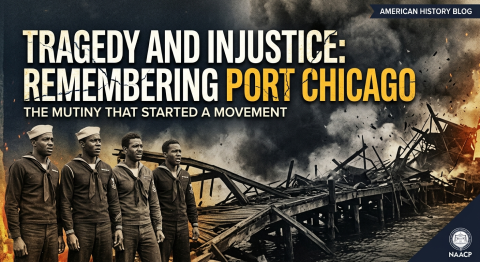
On the night of July 17, 1944, a catastrophic explosion rocked the Port Chicago Naval Magazine in California. What followed was a tragedy of immense scale, but it was also a watershed moment that exposed the deep-seated racism and systemic injustice that plagued the United States Navy. The Port Chicago incident is a searing story of loss, resistance, and the eventual, hard-won victory of desegregation – a victory born from the ashes of a preventable disaster and the courage of those who dared to stand against an unjust system.
The Catastrophe on the Waterfront:
Port Chicago, a critical supply point for the Pacific Theater in World War II, was bustling with activity. Hundreds of sailors, overwhelmingly African American, were engaged in the perilous task of loading thousands of tons of bombs and ammunition onto cargo ships. They worked long shifts, often without proper training or safety protocols, under the indifferent supervision of white officers. Then, at 10:18 PM, disaster struck. Two explosions, seconds apart, tore through the magazine and the ships SS Quinault Victory and SS E.A. Bryan.
The blast was monstrous. It was felt as far away as Nevada. A white-hot plume of fire and smoke lit up the night sky, and the resulting destruction was utter. 320 men, including 202 African American sailors, were killed instantly. Hundreds more were injured. The town of Port Chicago lay in ruins. In the immediate aftermath, the focus should have been on rescue, recovery, and a thorough investigation into the cause of the disaster. Instead, a dynamic of racial animus, callous disregard, and systemic failure unfolded.
Racism and the Callous Disregard for Black Lives:
The roots of the tragedy at Port Chicago were deeply embedded in the racist policies and attitudes of the U.S. Navy. The entire operation at the magazine was segregated. Black sailors were systematically funneled into dangerous, labor-intensive roles like munitions loading, while white personnel were generally assigned less hazardous duties. This segregation wasn't just physical; it was an organizational manifestation of the pervasive racism that stripped Black personnel of their dignity and minimized their humanity.
The sailors loading the bombs often received minimal or no formal training in the safe handling of explosives. Their white superior officers, driven by production quotas and imbued with a sense of racial superiority, frequently prioritized speed over safety, ignoring potential hazards and pushing the sailors beyond their limits. A 1994 Pentagon report on the incident acknowledged that racism played a direct role in the catastrophe, noting the "racially based assumptions and prejudices" that led to inadequate training, poor working conditions, and the assignment of Black sailors to the most dangerous tasks.
This callous disregard extended to the aftermath of the explosion. The surviving Black sailors, traumatized by the event and witnessing the horrific deaths of their comrades, were offered no counseling or support. Instead, they were quickly reassigned and expected to resume their dangerous work, again under the supervision of the same officers, and again without the reassurance of improved safety measures. The message was clear: their lives, their trauma, and their safety were secondary to the mission and the convenience of the existing segregated structure.
The Stand for Justice: The "Mutiny" at Mare Island
It was in this environment of systemic racism and indifference that the events known as the "Port Chicago Mutiny" unfolded. When ordered to resume loading ammunition just weeks after the explosion, hundreds of surviving Black sailors, many of whom had narrowly escaped death themselves, understandably refused. Their refusal wasn't an act of calculated rebellion, but a desperate stand for basic human dignity and the right to work in safe conditions. They had seen firsthand the consequences of negligence and racial prejudice, and they were no longer willing to risk their lives in a system that so clearly devalued them.
The Navy responded with the heavy hand of military authority, labeling the refusal a "mutiny" and threatening the sailors with severe punishment, including execution. Under extreme pressure, most eventually returned to work. However, 50 sailors, known as the "Port Chicago 50," remained resolute. They continued to refuse the order, insisting on guaranteed safety improvements and a fundamental change in how Black personnel were treated and utilized within the Navy.
The Trial and the End of Segregation
The "Port Chicago 50" were court-martialed and convicted of mutiny, receiving sentences ranging from eight to fifteen years in prison. Their trial was a farce of justice, a predictable outcome in a system that was inherently biased against them. Their "crimes" were not acts of treason or insubordination, but acts of conscience in the face of an unsafe and discriminatory system.
However, the courage of the "Port Chicago 50" and the resulting controversy ignited a powerful wave of advocacy and activism. The NAACP, under the leadership of Thurgood Marshall, took up their case, exposing the gross injustice of their trial and highlighting the broader issues of racism and segregation in the military. Public pressure mounted, with organizations, individuals, and even some political figures speaking out in defense of the sailors.
The Navy, unable to sustain the blatant contradictions of fighting for democracy abroad while upholding a system of racial oppression at home, was forced to confront the reality of its discriminatory practices. In 1945, less than a year after the Port Chicago Mutiny, the Navy began the process of integrating its ranks, becoming the first branch of the U.S. military to do so. While the fight for full equality was far from over, Port Chicago served as a critical catalyst for the desegregation of the entire military, a process that was formally mandated by President Harry Truman’s Executive Order 9981 in 1948.
A Legacy of Remembrance and Continued Struggle
The Port Chicago disaster and the subsequent fight for justice are a stark reminder of the devastating consequences of systemic racism. It is a story of victims whose lives were cut short by negligence and prejudice, and a story of heroes who, in the face of immense pressure, demanded to be treated with dignity and fairness.
For decades, the story of Port Chicago remained in the shadows, its importance overlooked and the injustices faced by the sailors unacknowledged. However, in recent years, there has been a renewed effort to honor the victims, vindicate the survivors, and ensure that the lessons of this critical moment in American history are not forgotten. The establishment of the Port Chicago Naval Magazine National Memorial and the ongoing efforts to exonerate the "Port Chicago 50" are important steps towards addressing the historical wrongs and ensuring that the full story of Port Chicago is told.
The Port Chicago incident stands as a powerful testament to the resilience of the human spirit in the face of adversity. It is a story of loss and tragedy, but it is also a story of courage, resistance, and the relentless pursuit of justice. By remembering Port Chicago, we not only honor the memory of those who were lost but also recommit ourselves to the ongoing work of exposing and dismantling systemic racism wherever it exists. The journey towards true equality is long, but it is paved with the stories of those who, like the sailors of Port Chicago, refused to be silenced in the face of injustice.