
- Adrian's Blog
- Log in or register to post comments
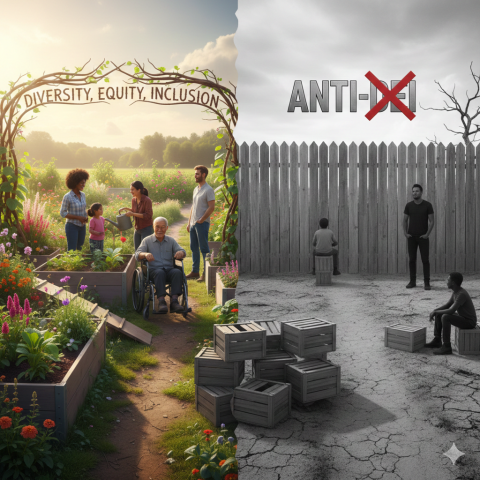
We talk a lot about "policy" and "metrics" when we discuss Diversity, Equity, and Inclusion. But if we strip away the corporate jargon, what we’re really talking about is the human longing to be seen, to be valued, and to have a fair shot at a good life.
When we lose sight of the heart behind these words, we lose sight of each other.
1. The Human Side of the Definitions
To understand these concepts, don't think about a spreadsheet. Think about your own life—the times you felt you belonged, and the times you felt like an outsider.
- Diversity vs. The Muted World
- Diversity is the vibrant, messy, beautiful reality of the human family. It’s the different stories, cultures, and faces that make life interesting.
- The Opposite (Homogeneity) is a world where everything is a reflection of the same image. It’s quiet, predictable, and ultimately, a little bit lonely. It’s like a garden with only one type of flower; it lacks the resilience and the soul that come from variety.
- Equity vs. Being Left Behind
- Equity is simply a hand reached out to someone who started further back. It’s recognizing that if we both want to see over a fence, and you’re a foot shorter than me, giving us both the same six-inch box doesn't help you. Equity is giving you the box you need so we can both enjoy the view.
- The Opposite (Inequity) is standing by while someone struggles with a burden you don’t have, then calling it "fair" because you didn't personally add to their load.
- Inclusion vs. The Pain of the Outsider
- Inclusion is the warmth of a room where you don’t have to hide who you are. It’s the feeling of "I am home here."
- The Opposite (Exclusion) is the cold ache of being in the room but knowing you aren't truly wanted. It’s being invited to the party but never being asked to dance.
2. A Conversation with the Fearful
There is a lot of fear right now. Many white men feel that DEI is a "Keep Out" sign hung on the door of opportunity. If you feel that way, it’s worth asking: Does making the circle wider actually push you out?
Widening the circle isn't a zero-sum game. Choosing to value someone else's journey doesn't devalue yours. Being "anti-DEI" isn't standing up against discrimination; it’s often a reaction to the discomfort of change. When we advocate for those who have been historically overlooked, we aren't saying your hard work doesn't matter. We are saying that everyone’s hard work should matter equally.
True fairness isn't found in keeping things the way they’ve always been—it’s found in making sure the "American Dream" (or any dream of success) isn't a private club, but a public promise.
3. What We Lose When the Light Goes Out
If we abolish the spirit of DEI, we don't just lose "programs"—we lose a piece of our humanity.
The true negative of walking away from these values is a deepening of the Great Loneliness. When we stop trying to understand each other’s struggles, we stop caring about each other. We become a society of individuals looking out only for "our own," retreating into silos of suspicion and resentment.
Without the bridge-building of DEI, we lose the "magic" that happens when different souls collide to create something new. We end up with a world that is efficient, perhaps, but hollow. We lose the chance to be surprised by the brilliance of someone who doesn't look like us.
The choice isn't between "us" and "them." It’s between a world where we all have to fight for a scrap of the blanket, or a world where we realize the blanket is big enough for everyone if we just learn how to share it.